Thursday, 24 April 2014

Do Customers Know More About Cars than Dealer Salesmen?

Car customers spend hours online and are more likely to know more about a dealer’s cars than the salesmen who sell them 


Is Your Mind Made Up?


As Automotive Management reported on 8th April, dealers find that customers ‘already have their mind made up’ before they visit a dealership. However that article and others are missing a key point – prospective customers don't just search for a car, they research the cars they want to buy and are increasingly looking to other car owners for their opinions.

Digital Diligence  
Reviews -  Search on Specific Model


WeLoveAnyCar.com have harnessed the power of the motorist in gathering the opinions of known car owners – no one can submit a review to our site without being asked. Once a review is submitted, we ask other drivers of the same derivative of car if they agree or disagree with the review. This ‘digital diligence’ avoids spurious and fake reviews. WeLoveAnyCar.com now has the views and opinions of over 538,000 car owners on virtually every make and model of car sold in the UK today.

Used Car Buyers - Start Online Not On Foot


According to Google, keen buyers will suck in information and will know a great deal about the car they want to buy. McKinsey & Company issued a paper in February 2014 which stated that 100% of used car buyers search on line first.

Review Sites for Holidays - Why Not Cars?


Prospective customers have been trained in review sites like TripAdvisor where they can find out what travelers thought of a hotel or holiday destination. Now they expect the same information to be available for cars for sale online and they expect it to be fair, accurate and up-to-date.

Car buyers will spend hours researching what car is best for them - using car review sites to 'ask' other car owners who have lived with and paid for a car for their opinion.

Educating The Salesman


WeLoveAnyCar.com plan to give dealers and dealer salesmen information on customer reviews on every car for sale on their forecourt where they are available. By working with dealers we think we can help salesman gain more information about the cars they have for sale. Hopefully they will be able to read as much about the cars they have for sale as their prospective customers.

Review Any Car


Research your own car by visiting our review site: http://www.weloveanycar.com/car-review


Tuesday, 22 April 2014

The Top Ten Dirty Secrets of Car Owners

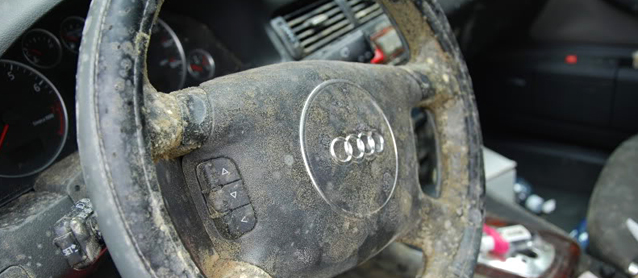
The hidden face of dirty, festering cars is revealed in a list of the most appalling finds and stomach churning car litter.  It appears that some car owners have no shame when sending their car for a spring clean. WeLoveAnyCar.com asked car cleaners to list their top 10 hates.  


The Hog Ring - Auto Upholstery Community - Dirty Car Interior

How Dirty Can A Car Be?

Car Cleaners: The Top 10 Dirty Car Finds


  1. Dried 'boogies' on the underside of the steering wheel
  2. Rancid food including cheese, meat and putrid vegetables
  3. Used tissues loaded
  4. Baby and kid vomit
  5. Slime and mould – usually as a result of wet garments and shoes
  6. Used nappies and other sanitary items
  7. Vermin including mice, fleas, worms and maggots
  8. Disgusting smells – unspecified
  9. Cigarette butts and ash
  10. Mud, animal dung, oil, grass sludge, etc


Money Doesn't Mean Clean


Cars are often the second biggest asset people own.  According to car cleaners, however, the value of the car is often odds with the garbage found in it. One car cleaner (who didn't want to be named) said, “I’ve cleaned cars worth over £100,000 and they've made me physically sick with the smell and the stuff I've found in them.”

Stop Press...

Who is the better driver? Take our 1 minute confidential survey to win an iphone or £500. Click here.   

Driver Detritus


Car cleaners turn a blind eye to most driver detritus.  The competitive nature of car cleaning services has cut the cost of a car valet in real terms and they can’t afford to be too fussy. However the line has to be drawn when it comes to the unsafe and the hazardous.  A list of items found by car cleaners included:

  • A dead bird:  “I wondered where the feathers came from.”
  • Maggots: “I forgot to take the maggot jar out last month, I thought flies in the car was strange”
  • Dirty nappy: “Oh yes.  We were caught short.  I meant to take it out last month”
  • Packed lunch: “Robin went on a school trip.  That was three months ago.”
  • Putrid meat: “I couldn't resist that farmers market last month.”

Posh Lady - Expensive Car - Dirty Little Secrets


Some car owners even leave sanitary materials and other intimate items in their car.  One car cleaner said, “Nothing surprises me now.  I’ve seen everything and quite often even the poshest lady driver can have the most surprising dirty little secrets hidden in their car.”


WeLoveAnycar.com is probably the biggest car review site in the World.  Car owners rate the economy, driving experience, reliability and if they would recommend their car to another driver.  It doesn't rate car cleanliness.

Photo credit: http://www.thehogring.com/2013/05/15/should-auto-upholstery-shops-charge-a-dirt-tax/ 


White Van Man Is Back, Working, and Can Be Found in Hampshire

Vans number 3.3 million on British roads – the highest ever and another sign of economic recovery. WeLoveAnyCar.com finds white van men outnumber women by 10 to 1 and Hampshire is home to more vans than anywhere else in the UK.


In another sign of Britain emerging from the recession and economic growth gaining pace, the UK government reports on 10th April that the number of light commercial vehicles - vans - on UK roads is the highest ever and new van sales are increasing faster than cars.

Whilst more women own and drive more cars than ever before, the van is still the preserve of male owners with men outnumbering women van owners by 10 to 1 according to the figures issued by the Department of Transport .

Half of all vans on the roads are owned by companies but owner/drivers of vans number 1.5 million. The growth in the number of owner/driver vans in the last ten years has been double that of company owned vans - another fact supporting the importance of the small business sector to the economy.

Plumbers, decorators, builders and other tradesmen stopped buying new vans as work dried up in 2008. However now more vans are being sold throughout the UK and the Van population has never been higher.
WeLoveAnyCar.com, the biggest car and van review site in the UK, crunched government stats and found that the ‘white van man’ is leading the way to economic recovery.

Vans registered by area also give a fascinating insight into Britain’s economic recovery with more vans being registered in the prosperous south with Hampshire, then Essex, leading the way.

Light Commercial Vehicles tend to have a much harder, longer life and face higher expectations from their owners. Reliability is key and factors like starting first time and the ability to repair cheaply and quickly high on owner’s demands. The Ford Transit – in its many forms – is highly rated by ‘white van man’ who is less likely to switch to other makes than car buyers.

Other manufacturers have focused their efforts on comfort and accessories to attract van buyers. However, the reviews of thousands of van owner drivers reveal that the core need is to work on time, every time.

Reviews written by Ford Transit owners show how important their Transit is, or was, to their business and life in general:

White Van Man - Key To Economic Recovery
“This was a brilliant little van - was powerful, economical and fun to drive. It carried loads &
always started at the first turn of the key. Only sold because the business failed!”
“The Ford Transit I owned was the most reliable vehicle I have owned. If it wasn't for the fact I lost my business I would of kept the vehicle without any doubts at all.”
“Very good hard working. Reliable just like myself”
“Fantastic reliable vehicle, backbone of Britain. High spec, versatile and great to drive. If you need a van to do the job and be reliable... buy a Transit”
“Great vehicle, doubled up as a workhorse, private car, towed my caravan with ease. And even converted to a camper van for odd night away. A good all-round mode of transport.”
David Titmuss, WeLoveAnycar.com spokesman said, “We didn’t set out to build a van review site but that’s what happened as well. The comments and reviews submitted by van owners are noticeably different than the hundreds of thousands of car reviews and views we have. White Van Man wants his van to work, start every time, and the most important luxury; a good radio.”

WeLoveAnyCar.com has the largest car review site in the UK with over 530,000 reviews and opinions of motorists covering virtually every make and model of car and van sold – new and used. 

Wednesday, 16 April 2014

Are Older Women Drivers the Hidden Powerhouse of Rising Car Sales in the UK?

Car ownership amongst women climbs by 1.6 million in 10 years – more than three times the growth of car ownership amongst men. 


More women are buying more cars than ever before according to UK government statistics released on April 10th.  New car ownership is growing at a faster rate amongst older women who could be the hidden powerhouse driving a revival in new and used car sales.
  

Women Own 10 million cars


In just ten years, car ownership amongst women has grown to nearly 10 million – and that doesn't include company cars and vans.  

Women Turn to The Internet To Choose Their Cars

Stop Press...

Who is the better driver? Take our 1 minute confidential survey to win an iphone or £500. Click here.   


Growth in Woman Car Owners:  3 x Men in Last 10 years


Whilst men still account for 14.7 million private cars on the road, that figure has grown just 500,000 in 10 years.  Women have bought an additional 1.6 million cars – three times as many as men.

Women may soon be neck and neck with men when it comes to new cars sold.  Nearly 43% of new cars sold privately are now bought by women. 

The Powerhouse in UK Car Sales - Mature Women

The growth in women drivers isn't necessarily younger women taking up the wheel.  According to the National Transport Survey there was a 20% increase in the number of trips taken by women drivers aged over 50 from 2003 to 2011.

Not Many Mature Women Watch 'Top Gear'


Women not only buy their own cars but they influence the choice of male partners.  Women could be the predominant, but ignored, force in car buying. The biggest growth market could be women over 50 years old – and not many of those buy car magazines or watch Top Gear.


Reliability, Economy, Practicality : Key Needs Of Women Car Owners

The Internet, Not Salesmen, Help Women Choose Their Cars


The importance of internet search in the automotive sector has grown dramatically.  The McKinsey& Company report published in February 2014 into the future of car buying outlines how 100% of used car purchases and the majority of new car purchases are made after detailed internet research has been carried out by the prospective buyer.  Also Amanda M.Kimbrough of the University of Alabama found that, ‘Women connect more than do men’ in her 2012 study and women engage more often with social networks and actively seek the opinions of others.

Quite clearly car dealers and car makers should not just treat women with respect but should expect that they have done their research, sought the opinions of others and could know far more about a car than the salesman selling it.


WeLoveAnyCar.com has the largest car review site in the UK with over 530,000 reviews and opinions of motorists covering virtually every make and model of car sold – new and used. 

Monday, 31 March 2014

London Behind In Global Race - Bikes Now Faster Than Cars

WeLoveAnyCar.com, the UK’s biggest car review site, crunches new Department of Transport figures and finds bikes go faster in Camden than cars. With an average speed of less than 9.5 MPH, car ownership is falling in London.


Department of Transport figures released on 13th February, highlight a growing problem in the world's leading city: London.
London Boroughs responsible for local 'A' roads are losing the global race in transport efficiency as the average speed of cars in the Capital falls below cyclists.
Camden is the slowest Borough according to measurements issued by the Department of Transport.
155 MPH Porsche In Camden With Average 9.5 MPH in Camden, London
WeLoveAnyCar.com analysed the Department's monthly figures by each individual 'A' road then averaged these out over 12 months by Local Authority or Borough. All figures were based on the speeds of cars from 7am to 10am on individual roads measured by Department of Transport officials. Whilst they say their figures are 'experimental', they have been collecting data for more than 6 years on over 4000 stretches of 'A' roads.
The top ten slowest road networks were all in London Boroughs with Camden vehicle owners averaging road speeds of just 9.5 MPH over a 12 month period.
Close behind in the slowest road tables were the City of London and Islington. However virtually all the London Boroughs are bottom of the vehicle speed lists.
The fastest Local Authority was Rutland. The slowest road in England over 12 months was Tottenham Court Road.
David Titmuss of WeLoveAnyCar.com said, “We track average top speeds by car by area and our database runs into millions. We found some of the fastest cars are owned by people who live in the slowest Boroughs in London."
Car ownership is declining in many major cities and this new analysis gives an insight into why commuters are increasingly turning to the bike, bus, train and even choosing to walk.
"Soon walking could be faster than car in London if the trends in the data continue," said the WeLoveAnyCar.com spokesman.

Wednesday, 19 March 2014

Women Want Reliability and Economy but Do Men Turn to 'Electo-Bling' When Choosing a New Car?

The number of electrical faults for over 50,000 car warranty claims more than doubled from 2008 to 2013. Yet car makers are set to meet the insatiable demand for electronic wizardry - but will it appeal to the practical mum?


Are Men Suckers For The Latest Gadgets?


Spokesman for the UK’s biggest car review site said, “There appears to be a divide between men and women when it comes to cars.  Some improvements like 'keyless entry' score well with women as does any gadget which makes it easier to get from A to B.  Men on the other hand, seem to be fascinated by technology.”


Stop Press...

Who is the better driver? Take our 1 minute confidential survey to win an iphone or £500. Click here.   


Apples In Cars - Not That New

Apple And Google Fight To Take Control Of Your Car


The recent Geneva Motor Show illustrated how the electronic trend is set to be turbo boosted as heavy weight tech giants like Apple and Google move in to the car world.

Car manufacturers now spend an increasing amount on inventing and adopting electronic gadgetry in an effort to gain the attention of motorists who love to boast to their friends about their ‘heads up display’ and the fact that the car can automatically adapt to the weather conditions.


Tuesday, 18 March 2014

The 10 Worst Roads In Britain Announced – Brian Clough Would Have Sorted It


Brian Clough Way in Nottingham the worst road in Britain. The 10 worst roads in Britain revealed.


Over 60% of all journeys along Brian Clough Way in Nottingham were delayed according to Department Of Transport statistics published on 13th March.


Brian Clough WayThe 10 Worst Roads in Britain*

1.    A52 Brian Clough Way, Nottingham
2.    A61 from Barnsley to the M1
3.    A404 from Maidenhead to M4
4.    A63 South of Hull
5.    A27 Brighton
6.    A33 Basingstoke
7.    A24 Worthing
8.    A500 Newcastle Under Lyme
9.    A23 Redhill
10.  A259 Bexhill

(*Data is combined from a number of data points and is subject to interpretation - the Government do not use Google Earth! Roads near Brighton particularly the A27, where the Highway Agency is responsible, are mentioned in several data points. )

Motorist Misery - Traffic Jams
Motorist’s ultimate misery, apart from breakdown, comes in the form of traffic delays with hours wasted every day caused by overcrowding and poor road planning.

A 60% Chance of A Delay

The worst road in Britain, according to the Department of Transport, is Brian Clough Way in Nottingham where less than 40% of drivers are likely to travel the link road to the M1 on time.

'Rome wasn't built in a day. But I wasn't on that particular job.' Brian Clough


Brian Clough once said, 'Rome wasn't built in a day. But I wasn't on that particular job.' The people of Nottingham still hold the charismatic and rambunctious manager in high esteem and one local resident motorists said, “It’s a shame Cloughy wasn’t here to sort this mess, he wouldn’t have let the people of Nottingham sit in traffic and put up with it – he would have taken his name off the road.”

Over 2000 Roads Timed

The Department of Transport state that their ‘on-time’ car figures are experimental and are being tested but the data goes back to March 2011. Over 2000 stretches of road have been regularly monitored and the DoT is looking for users of the data to give feedback to improve their reliability and use.

Problems On The South Coast

The worst ten roads in Britain have also revealed all is not well in the prosperous South with traffic nightmares near Brighton, Worthing and Bexhill clogging up the roads on a daily basis.

And The Best Road Is....

The best roads are also revealed with A11 between A1101 and A14 East Anglia achieving 100% on time conditions in January 2014. However, even on this small quiet stretch of road, road works have been announced and local drivers will face delays.


*Important Notes


The Government use exact co-ordinates called ‘Easting’ and ‘Northing’.  These are listed against codes called ‘HATRIS’  in the tables supplied by DoT (eg  AL3155).  They do not use Google Maps.

We therefore reverted to ‘Easting’ and ‘Northing’ references and found the exact locations as the DoT use them.

Given the precise nature of the references, one road can appear twice.  It appears twice as each carriage way is measured independently.  For example, a road to the motorway can be slower than the road from it.

The analysis carried out combined a number of lines of the data - which is still a little experimental and prone to error.  This allowed us to take out the duplicates (two references for the same stretch of road) but utilise the data. 

The combination of this allowed us to name roads in general and towns in general, this has been subject to interpretation.